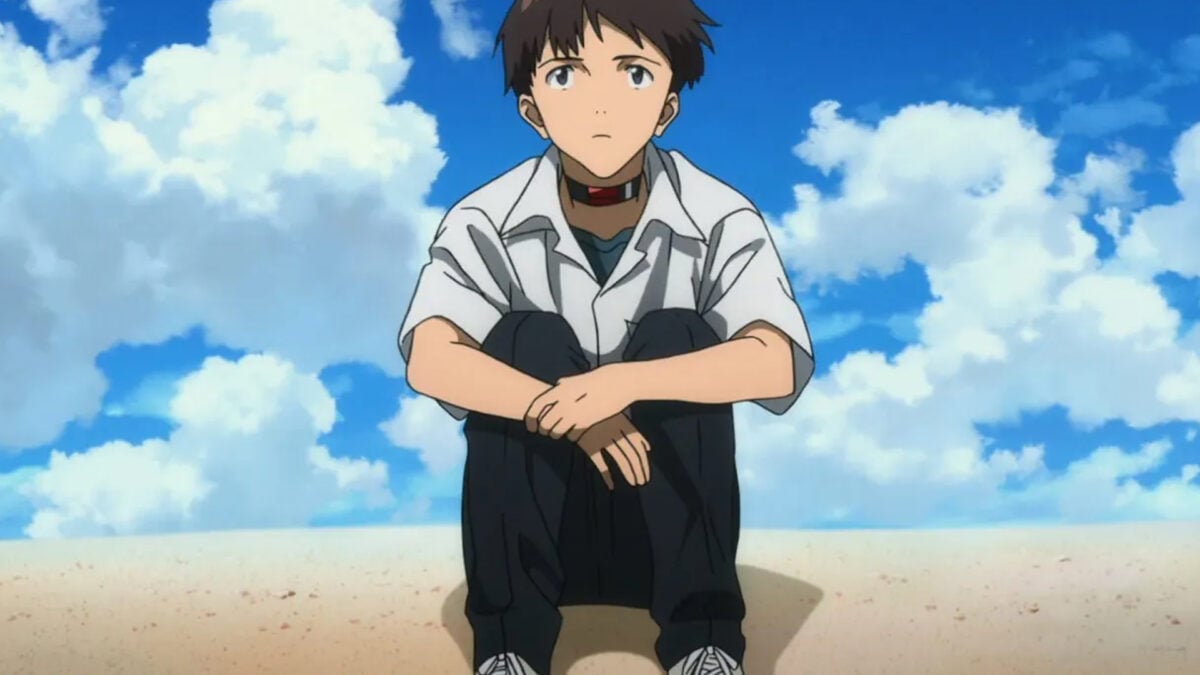
Evangelion Reimagined: NieR's Yoko Taro Leads a Brand-New Series
Thirty years after its initial seismic impact on the world of anime, the legendary Evangelion franchise is once again defying expectations. In a move that sent ripples of excitement and surprise through its dedicated fanbase, a brand-new evangelion series announced to be in production, with an unexpected creative force at its helm: Yoko Taro, the visionary mind behind the critically acclaimed NieR series, particularly NieR: Automata.
The bombshell reveal dropped on February 23rd at Yokohama Arena, during the grand finale of the "Evangelion:30+; 30th Anniversary of Evangelion" festival. This large-scale celebration marked three decades of a franchise renowned for its profound psychological depth, existential themes, and groundbreaking mecha action. While fans might have anticipated commemorative projects, a "completely new" series felt like a true resurrection, especially following what many perceived as the definitive conclusion with 2021’s Evangelion: 3.0+1.0 Thrice Upon a Time.
This upcoming project signals a fresh start, rather than a direct continuation, promising a novel interpretation of the iconic universe. The news has ignited fervent discussions about the future of Evangelion, especially with such a distinctive storyteller guiding its narrative. For more initial reactions and details about this groundbreaking announcement, you can read our previous coverage: New Evangelion Series Announced: NieR Creator Yoko Taro at the Helm.
A Bold New Direction: Yoko Taro and the Creative Team
The announcement wasn't just about a new series; it unveiled a powerful creative team poised to chart Evangelion's next chapter. Leading the charge in a pivotal role is Yoko Taro, who will handle both the Series Composition and Script. Known for his unique blend of philosophical storytelling, deconstructionist narratives, and often melancholic yet deeply moving character arcs in games like NieR: Automata and the Drakengard series, Taro brings a distinct voice to the franchise. His penchant for non-linear narratives, multiple perspectives, and exploring the darker facets of humanity aligns surprisingly well with Evangelion's core themes.
Joining him from the NieR universe is renowned composer Keiichi Okabe, who will be responsible for the series' score. Okabe's atmospheric, haunting, and often emotionally charged compositions for the NieR games have garnered widespread acclaim, creating unforgettable soundscapes that perfectly complement their complex narratives. His ability to weave together traditional instruments with modern electronic elements could provide a fresh yet evocative auditory experience for Evangelion, which has always been celebrated for its distinctive sound design and iconic music.
The directorial duties will be shared by Kazuya Tsurumaki and Toko Yatabe. Tsurumaki is no stranger to the franchise, having worked on various Evangelion projects, including the Rebuild of Evangelion films and The End of Evangelion. His experience ensures a certain level of visual continuity and understanding of the series' established aesthetic. Yatabe, whose recent credits include key animation on critically acclaimed series, offers a fresh perspective, potentially blending new techniques with the established Evangelion visual language.
Production for this ambitious project will be a joint effort between Studio Khara and CloverWorks. Studio Khara, Hideaki Anno's own studio, has been the torchbearer for Evangelion since the Rebuild films, guaranteeing that the original spirit and quality control remain intact. CloverWorks, known for its diverse portfolio including hits like Horimiya, Spy x Family, and Bocchi the Rock!, brings a reputation for high-quality animation and dynamic storytelling, promising a visually stunning return for the beloved franchise.
Unpacking Evangelion's Legacy and Unexpected Return
To truly appreciate the significance of this new evangelion series announced, one must understand the monumental legacy it builds upon. The journey began in 1995 with Neon Genesis Evangelion, a television series that redefined the mecha genre. Set in a post-apocalyptic world under siege by mysterious entities known as Angels, it followed troubled teenagers, most notably Shinji Ikari, as they piloted colossal bio-mechanical weapons called Evas. While its action sequences were spectacular, what truly set Evangelion apart was its profound psychological exploration, delving into themes of depression, trauma, identity, and existential dread with unparalleled depth.
The franchise later saw a revitalization for a new generation with the Rebuild of Evangelion film series, spanning from 2007 to 2021. This cinematic tetralogy, culminating in the critically and commercially successful Evangelion: 3.0+1.0 Thrice Upon a Time, was widely regarded as Hideaki Anno's definitive farewell to his seminal work. The film surpassed ¥10 billion at the Japanese box office and provided a poignant, if complex, sense of closure for many long-time fans. It genuinely felt like the end of an era.
This context is why the announcement of a "completely new" series felt so surprising. For years, the narrative around Evangelion had been one of completion and resolution. The prospect of a fresh start, particularly with Hideaki Anno stepping back from the primary writing role, signifies a bold pivot. It raises questions about how this new entry will connect to, or deviate from, the established lore. Will it be a parallel universe? A distant future or past? Or a complete reimagining of the core concepts? Whatever the answer, it cements Evangelion's status not just as a classic, but as an ever-evolving cultural phenomenon.
For a deeper dive into the implications of this creative shift, see our article: Evangelion's Unexpected Return: Yoko Taro Replaces Anno as Writer.
What to Expect from a Yoko Taro-Helmed Evangelion
The appointment of Yoko Taro as the lead writer for a new evangelion series announced is perhaps the most intriguing aspect of this announcement. Fans of his work know that his approach to storytelling is anything but conventional, and this promises a truly unique iteration of Evangelion. Here are some expectations and insights into what his vision might bring:
- Philosophical Deconstruction and Existentialism: Yoko Taro revels in deconstructing established tropes and delving into profound philosophical questions about humanity, morality, and existence. Given Evangelion's own deep dives into these areas, we can anticipate an even more intense exploration of the human condition, suffering, and the meaning of free will in a world facing apocalypse.
- Non-Linear and Multi-Perspective Narratives: Taro often employs non-linear storytelling, multiple playable characters, and unreliable narrators to present a fragmented yet ultimately cohesive picture. Imagine experiencing the Evangelion universe not just through the eyes of a single pilot, but perhaps from the perspective of an NERV operative, a civilian, or even an Angel, each adding layers of complexity to the overarching conflict.
- Tragic Beauty and Emotional Impact: While his narratives can be bleak, they are consistently infused with a haunting beauty and immense emotional weight. Expect heart-wrenching character arcs, difficult choices, and perhaps even "bad" endings that force viewers to confront uncomfortable truths. His ability to create profound empathy for unconventional characters could lead to fascinating new interpretations of Evangelion's cast.
- Questioning Authority and Morality: Yoko Taro frequently challenges conventional notions of heroism and villainy, blurring the lines between good and evil. NERV's secretive agenda and SEELE's enigmatic Human Instrumentality Project could be dissected with even greater scrutiny, presenting different moral quandaries than seen before.
- Musical Synergy: With Keiichi Okabe composing, the series is guaranteed a rich and evocative soundtrack. Okabe's music often conveys a sense of melancholic grandeur, perfectly suited for the weighty themes and cosmic scale of Evangelion. His ability to blend orchestral elements with electronic sounds could create a fresh yet familiar sonic identity.
Fans approaching this new series should do so with an open mind, ready to embrace a reimagining rather than a replication. While it may not be Anno's vision, Yoko Taro possesses a rare talent for crafting narratives that linger long after the credits roll, making him a compelling choice to guide Evangelion into its next era.
Beyond the Screen: Evangelion's Enduring Cultural Impact
The 30th Anniversary festival where the new evangelion series announced was merely one facet of the franchise's ongoing expansion. The event itself was a testament to Evangelion's enduring cultural footprint, featuring extensive exhibitions, interactive stage events, and even the franchise’s first-ever kabuki performance, showcasing its permeation into diverse artistic mediums.
Further demonstrating its vibrant life beyond the core anime series, the festival also screened a new 13-minute short film. This standalone piece, written and supervised by Hideaki Anno and directed by Naoyuki Asano, presented an intriguing alternate universe with Asuka as the protagonist. This project reassured fans that Anno still maintains a creative interest in the world he built, even as he passes the torch for the main series.
The expansion isn't confined to traditional media. Looking ahead, fans will be able to literally step into the Evangelion universe with a new immersive attraction at Nagasaki theme park Huis Ten Bosch. Billed as Japan’s first 8K flying theater attraction, set to open in spring 2026, this experience promises to combine ultra-high-definition visuals with motion, sound, and special effects to fully immerse guests in the world of Evangelion. These ventures underscore that Evangelion is more than just an anime; it's a global phenomenon that continues to innovate and captivate audiences across various platforms, ensuring its relevance for decades to come.
Conclusion
The announcement of a new evangelion series announced under the creative direction of Yoko Taro marks an exhilarating, if unexpected, new chapter for one of anime's most iconic franchises. Far from fading into memory after its supposed conclusion, Evangelion is poised for a significant reimagining, promising a fresh perspective on its beloved characters, complex lore, and profound themes. With Yoko Taro's unique narrative genius, Keiichi Okabe's masterful compositions, and the combined animation prowess of Studio Khara and CloverWorks, fans are bracing for an experience that is both deeply familiar and wildly unpredictable.
While specific plot details and a release date remain under wraps, the mere possibility of a Yoko Taro-helmed Evangelion is enough to fuel immense anticipation. It's a testament to the franchise's enduring power and adaptability that it can attract such distinctive talent, ensuring that Evangelion continues to challenge, provoke, and inspire new generations. The wait for further information will undoubtedly be long, but the prospect of witnessing Evangelion reborn through such a visionary lens promises to be worth every moment.